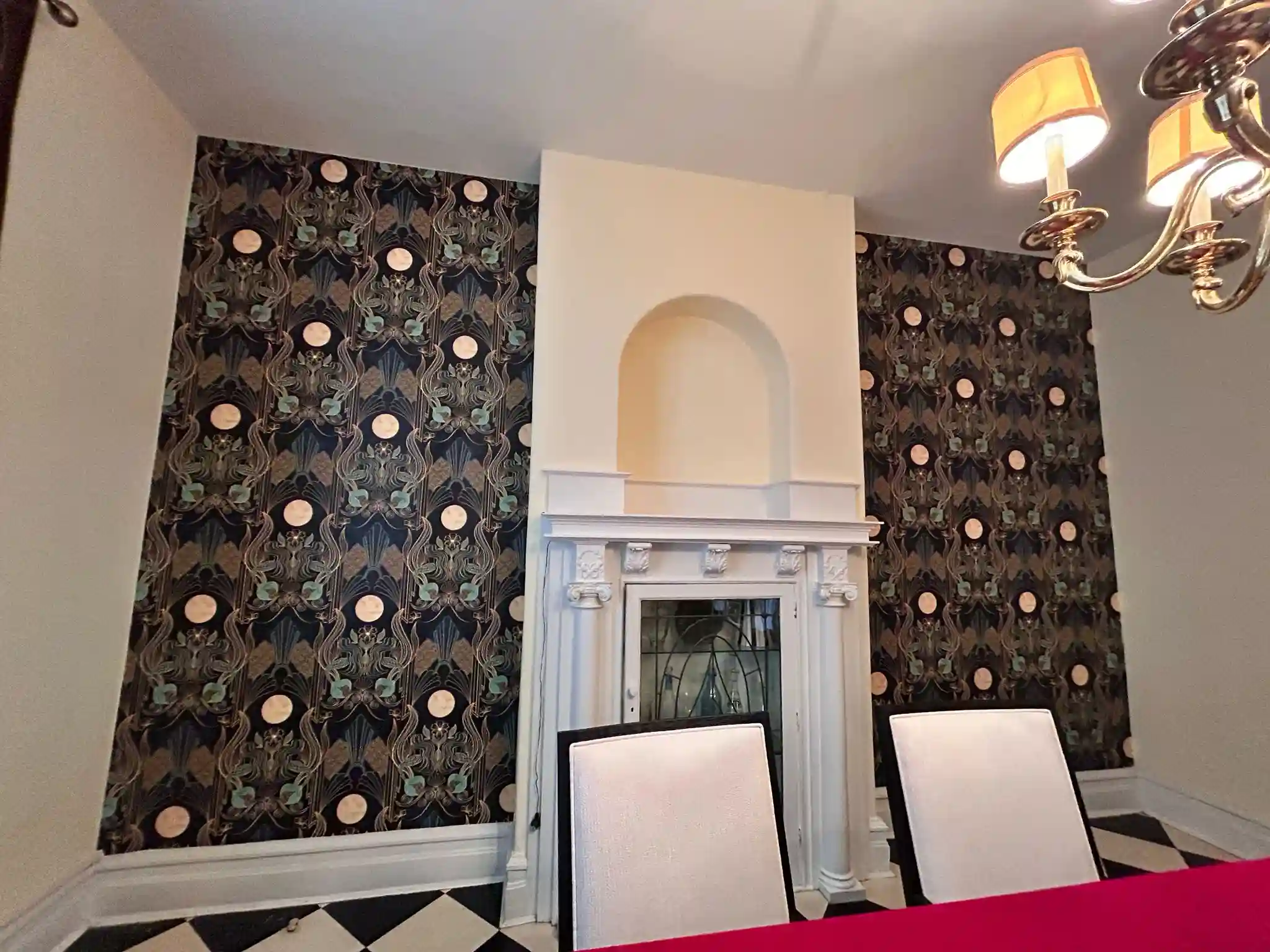
Wallpaper Installation for a Growing, Mixed-Housing Community
Woodbury has intentionally developed a broad mix of housing, with city planning focused on maintaining both single-family and multifamily options. That means wallpaper projects can range from a newly finished home south of Dale Road to an established property, townhome, apartment, office, clinic, restaurant, or customer-facing business interior.
Each setting calls for different preparation and project planning. New drywall may still have builder paint or visible finishing transitions. An established room may contain repeated paint layers and past repairs. A multi-unit building can add access requirements, while a commercial project may need durable materials and work scheduled around normal operations. We review these conditions before wallpaper is ordered or cut.
Wallpaper for New Construction and Recently Finished Homes
A newly built wall is not automatically ready for wallpaper. Drywall seams, fastener spots, sanding marks, overspray, and differences between joint compound and drywall paper can remain visible beneath smooth or lightly colored material. Builder-grade paint may also provide a less suitable installation surface than a properly selected wallcovering primer.
Checking New Drywall Before Installation
We inspect new drywall under direct light, check whether the finish is consistent, and confirm that paint has cured according to the relevant product instructions. Raised compound, dents, rough sanding, or damaged drywall facing should be corrected first. The wall is then prepared and primed for the selected wallcovering rather than treated as ready simply because construction is recent.
Coordinating With Other Finish Work
Wallpaper should be scheduled after dusty sanding, major painting, electrical adjustments, trim work, and other activities that could damage or contaminate the installation surface. If flooring, built-ins, or final fixtures are still being completed, the work sequence should be confirmed so the finished wallpaper is not exposed to unnecessary traffic or repairs.
For bedrooms, living spaces, dining rooms, nurseries, home offices, and murals, review our residential wallpaper installation service.
Established Woodbury Homes and Remodeling Projects
Woodbury's first planned housing development, Woodbury Heights, began in the 1950s, and the city has continued to grow through many periods of residential construction. Established homes may now include renovated kitchens, reconfigured living spaces, additions, updated bedrooms, or converted home offices. The walls in one project can therefore have different ages and finishes even when they appear similar.
Older painted drywall may contain filled fastener holes, paint ridges, glossy coatings, old adhesive, or repairs with different porosity. Remodeling can introduce transitions between original walls and new drywall. These differences should be smoothed and sealed so they do not show through the wallpaper or cause uneven drying.
Updating Individual Rooms Without Losing Continuity
A wallpaper project can give a dining room, bedroom, powder room, entry, or home office a distinct identity without repeating the same pattern throughout the home. Continuity can come from related color, pattern scale, or texture. When several rooms are included, we review where they are visible together and plan each layout as part of the larger interior.
Townhomes, Apartments, and Multi-Unit Properties
Woodbury's housing strategy includes townhomes, apartments, senior housing, and other multifamily options alongside detached homes. These properties often have efficient layouts and newer surfaces, but the wall still needs to be checked for builder paint, joint-compound transitions, previous mounting holes, and localized repairs.
Residents and property managers should confirm working hours, parking, loading access, shared-area protection, material storage, and any requested insurance documentation before scheduling. For repeated unit layouts or common areas, one approved installation area can establish pattern position, seam appearance, and preparation expectations before the work continues elsewhere.
Wallcoverings for Active Family Spaces
Material selection should reflect how the room is used. A protected bedroom wall can support a delicate paper or natural texture, while an entry, hallway, play area, or frequently used dining space may benefit from a finish selected with cleaning and contact in mind. In powder rooms, suitability for moisture-prone conditions and adequate ventilation should be reviewed before installation.
Large patterns and murals require accurate positioning around beds, desks, furniture, doors, and windows. The wall should be measured at several points, and enough trimming allowance should be included for ceilings and floors that are not perfectly level.
Commercial Wallcovering for Woodbury Businesses
Woodbury continues to support commercial and industrial growth alongside residential development. Local projects may include offices, medical or professional waiting areas, restaurants, retail interiors, meeting rooms, employee spaces, and common areas in mixed-use or multi-unit properties.
Commercial wallcovering should be selected for the wall condition, expected traffic, cleaning method, lighting, brand requirements, and any performance specifications supplied for the project. A product that works well on a protected feature wall may not be suitable for a corridor, reception desk, or frequently touched surface.
Scheduling and Trade Coordination
Business projects may need to be completed during a defined access window or coordinated with painters, flooring installers, electricians, designers, and property management. The scope should identify which walls are ready, who supplies the material and adhesive, where rolls can be staged, and whether access equipment is required.
For offices, healthcare-related interiors, restaurants, retail, and common areas, review our commercial wallpaper installation service.
Choosing the Right Wallcovering
Pattern is only one part of the decision. Backing, weight, seam appearance, cleaning guidance, installation method, and room conditions all affect performance. Before installation, we confirm the manufacturer's instructions, recommended adhesive, pattern repeat, match type, and whether all rolls share the correct design and dye lot.
Non-woven wallpaper is available in many residential styles and can work across bedrooms, living spaces, offices, and dining rooms depending on product instructions.
Traditional paper wallpaper can provide fine detail but benefits from a smooth, consistently sealed installation surface.
Grasscloth and other natural wallcoverings have expected panel variation and visible seams that should be reviewed in the room's actual lighting.
Murals and custom panels require precise dimensions, panel-sequence review, and sufficient trimming allowance.
Washable vinyl and commercial-grade materials may suit high-use areas when the wall, primer, adhesive, and backing are compatible.
Measurements and Ordering for New or Remodeled Rooms
Wallpaper quantity cannot be determined from square footage alone. Roll width and length, usable drop length, pattern repeat, match type, doors, windows, and trimming waste all affect the final requirement. Large repeats may use substantially more material, while custom murals need dimensions confirmed at several points across the finished wall.
In new construction or an active remodel, final measurements should be taken after drywall, trim, built-ins, and other elements that define the installation area are complete. Ordering from preliminary plans can create shortages or leave a mural sized for a wall that changed during finish work. All rolls should be checked for design, quantity, damage, and matching dye-lot information before the installation date.
Wallpaper Removal and Wall Preparation
Existing wallpaper should normally be evaluated for removal rather than automatically covered. Old material can conceal loose seams, adhesive residue, torn drywall facing, or unstable paint. After testing and removal, the exposed wall can be cleaned, repaired, smoothed, and primed for the new finish.
The final installation surface should be clean, dry, sound, and smooth enough for the selected product. Hidden conditions become clear only after testing or removal begins, so preparation should be confirmed before the new wallpaper is installed.
For stripping, adhesive cleanup, and preparation for a new finish, see our wallpaper removal service.